
Best Ways to Keep Home Clean: Daily & Weekly Guide
Table of Contents
- Quick Cleaning Hacks for Everyday Messes
- Your Daily Cleaning Routine: Small Habits, Big Results
- The Weekly Cleaning Schedule That Actually Sticks
- Room-by-Room House Cleaning Checklist
- Safe Product Use and Surface Compatibility
- Preventive Habits and Household Systems That Keep Home Clean
- Conclusion: Building a Cleaning Rhythm That Lasts
- Frequently Asked Questions
Last Updated: October 7, 2026
Quick Cleaning Hacks for Everyday Messes
Keeping up with mess in real time beats marathon cleaning sessions every time. The best ways to keep home clean start with small, fast habits, not weekend deep cleans. At Bettermark Home & Property Services, LLC, we see the difference daily: homes that handle messes the moment they happen stay cleaner with less effort overall.
The Two-Minute Rule for Spills and Clutter
Handle anything that takes under two minutes right away. Wipe the spill, hang the coat, clear the counter. Waiting lets stains set and piles grow.
This one habit prevents most of the deep cleaning people dread. Try it for a week and watch how much less builds up.
Natural Cleaners You Already Own
You do not need a cabinet full of products. A few basics handle most jobs:
- White vinegar cuts water marks and light grease on glass and chrome
- Baking soda lifts stains and absorbs odors in the fridge or trash bin
- Lemon freshens drains and breaks down light buildup
- Rubbing alcohol removes adhesive residue and disinfects small surfaces
- Dish soap plus warm water handles most countertop spills
Mix vinegar and water in a spray bottle for an all-purpose surface cleaner. Skip it on natural stone, since acid can dull the finish.
Your Daily Cleaning Routine: Small Habits, Big Results
A daily cleaning routine works because it spreads the load. Ten focused minutes in the morning and ten at night keep a home presentable without a single exhausting session. Consistency matters more than intensity here.
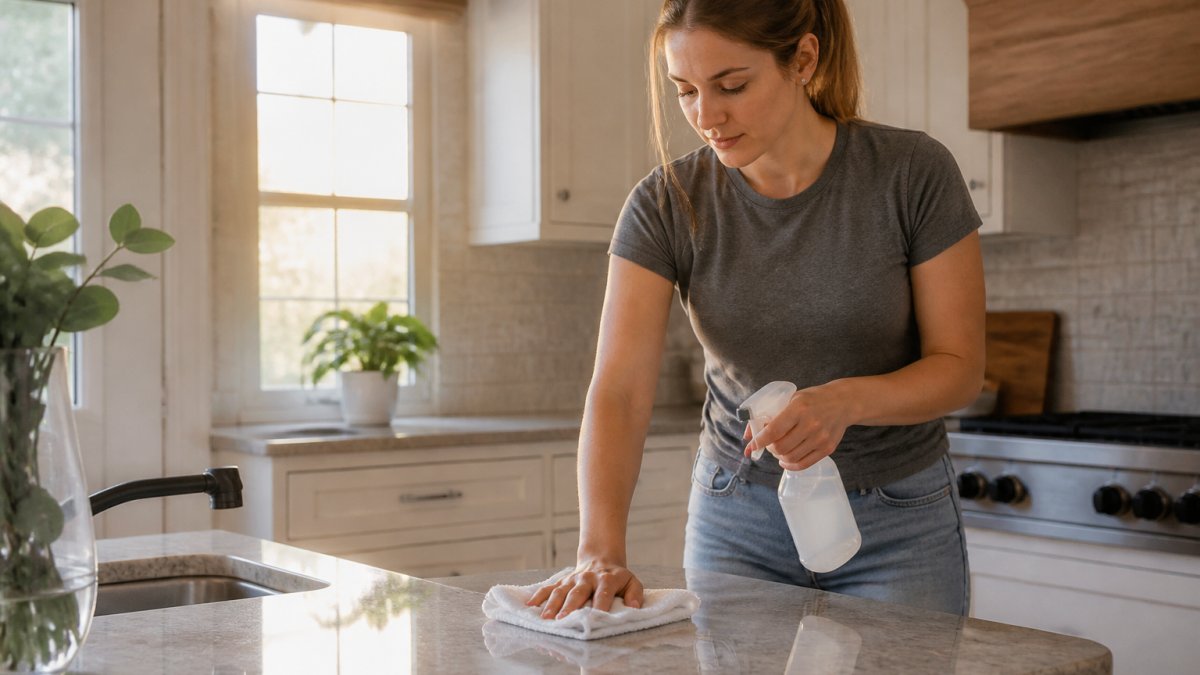
The 10-Minute Morning Reset
Run this loop in order, moving in one direction through the home so you never backtrack:
- Make the bed (60 seconds), a made bed instantly makes a room read as tidy, even if nothing else is done
- Wipe the bathroom sink and counter (90 seconds), a microfiber cloth and a spray bottle of diluted dish soap handle toothpaste and soap scum
- Squeegee or wipe the shower walls (60 seconds), this single habit is the biggest preventer of soap scum and mildew
- Clear and wipe kitchen counters (3 minutes), put away dry dishes, wipe crumbs, spot-clean the stovetop
- Start one load of laundry or run the dishwasher (2 minutes), let a machine do work while you are away
- Scan the main living area (90 seconds), fluff pillows, fold one throw blanket, straighten the coffee table
The 10-Minute Evening Reset
The evening reset is about closing loops so tomorrow starts clean:
- Load dirty dishes and start the dishwasher, or hand-wash what will not fit
- Wipe kitchen counters and the sink; run the disposal with cold water and a lemon half
- Do a five-minute tidy, a basket per room catches stray items fast
- Spot-vacuum or sweep the kitchen and entryway floors
- Set out tomorrow’s items (keys, bag, mail) so surfaces stay clear
- Take out trash or recycling if it is full or smelly
When You Only Have 10 Minutes Total
Some days you get one block, not two. Triage in this order:
- Kitchen counters and sink, food waste draws pests and odors fastest
- Bathroom sink and toilet seat, highest-touch, highest-germ surfaces
- Main entryway floor, tracked-in grit spreads to every other room
- One visible clutter pile, visual mess drives the feeling of a dirty home more than hidden grime
Skip dusting, windows, and floors on a 10-minute day. They tolerate delay; food and moisture do not.
Keep a small caddy of cleaner and cloths in each bathroom and the kitchen. When supplies are within reach, you actually wipe things down instead of walking away. A second caddy near the entryway lets you wipe shoes-off zones and door handles in seconds.
Why Frequency Beats Intensity
A common pattern among people who keep homes consistently clean is that they never let a task reach the point where it needs real effort. A wiped sink takes 30 seconds; a scrubbed one with hardened soap scum takes 10 minutes. Daily micro-tasks cost less total time than weekly catch-up sessions, and they keep the home in a state where a surprise guest never triggers panic cleaning.
The Weekly Cleaning Schedule That Actually Sticks
A weekly cleaning schedule sticks when tasks are spread across the week instead of stacked into one day. Most people quit because they try to do everything on Saturday. Break it up and it becomes manageable.
How to Split Tasks Across the Week
Assign one zone to each day:
| Day | Task | Time |
|---|---|---|
| Monday | Vacuum living areas | 20 min |
| Tuesday | Clean bathrooms | 25 min |
| Wednesday | Mop floors | 20 min |
| Thursday | Dust surfaces and shelves | 15 min |
| Friday | Change bedding and laundry | 30 min |
| Saturday | Kitchen deep wipe | 25 min |
| Sunday | Rest or catch up | Varies |
This room-by-room approach keeps any single day light. It also builds a rhythm you can keep for years, not weeks.
Room-by-Room House Cleaning Checklist
A house cleaning checklist removes the guesswork. You stop wondering what to do next and just work down the list. Frequency matters as much as the tasks themselves, a task done at the wrong interval either wastes time or lets grime set.
How to Read This Checklist
Each room lists tasks by frequency: D = daily, W = weekly, M = monthly, Q = quarterly. Do the daily items as part of your reset routine; batch the weekly items into your weekly schedule; save monthly and quarterly items for a single deep-clean day.
Kitchen
- D: Wipe counters and cutting boards after every meal
- D: Wipe the stovetop and the outside of the microwave
- D: Run the dishwasher or hand-wash dishes before bed
- W: Clean sinks and taps; scrub the basin and around the drain
- W: Wipe cabinet fronts and appliance handles
- W: Sweep and spot-mop the floor
- M: Wipe inside the microwave and the fridge shelves
- M: Descale the coffee maker and kettle
- Q: Pull out the fridge and stove to clean behind them
- Q: Wipe inside cabinets and the range hood filter
Bathroom
- D: Wipe the sink and counter after use
- D: Squeegee shower walls after the last shower
- W: Scrub the toilet, bowl, seat, base, and the floor around it
- W: Clean the mirror and wipe light switches and door handles
- W: Wash bath mats and hang towels to dry fully
- M: Scrub the tub and shower surround; treat grout lines
- M: Wash the shower curtain or liner
- Q: Descale showerheads and faucet aerators
Bedrooms
- D: Make the bed
- W: Wash sheets and pillowcases
- W: Dust nightstands, lamps, and headboards
- W: Vacuum or sweep the floor, including under the bed if reachable
- M: Wipe light switches, remotes, and door handles
- Q: Wash pillows, comforters, and mattress protectors
- Q: Vacuum the mattress and rotate it
Living Areas
- D: Tidy surfaces and return items to their rooms
- W: Dust shelves, electronics, and picture frames
- W: Vacuum upholstery and under cushions
- W: Vacuum or sweep floors
- M: Wipe light switches, remotes, and door handles
- M: Clean windows and mirrors
- Q: Shampoo or steam-clean upholstery and rugs
Entryways and Floors
- D: Shake out or vacuum doormats
- W: Sweep or vacuum entry floors
- W: Wipe door handles and the inside of the entry door
- M: Wash doormats
- M: Mop hard floors with a cleaner matched to the surface
- Q: Deep-clean grout and baseboards
If you only remember one rule from this checklist, make it this: kitchens and bathrooms get daily attention, bedrooms and living areas get weekly attention, and everything else can wait for the monthly or quarterly pass. That single priority order keeps a home presentable without ever requiring a marathon session.
Never mix bleach with vinegar or ammonia-based cleaners. The combination releases toxic gas. Use one product at a time and rinse between them.
Adapting the Checklist to Your Home
A studio apartment can collapse the bedroom and living-area lists into one. A home with pets should move floor vacuuming and upholstery cleaning up a frequency tier, pet dander and hair accumulate faster than human dust. A home with allergies benefits from weekly rather than monthly dusting and from washing bedding in hot water. Adjust the frequencies, not the tasks; the tasks themselves do not change.
Safe Product Use and Surface Compatibility
Matching the cleaner to the surface prevents damage. The wrong product can dull stone, scratch stainless steel, or strip a finish. Read the label before you spray.
- Natural stone: use pH-neutral cleaners only
- Stainless steel: wipe with the grain using a soft cloth
- Chrome and glass: vinegar and water work well
- Wood: use a damp cloth, never a soaking one
- Laminate: avoid abrasive pads that scratch
Keep disinfectants on the surface for the time the label states. Wiping too soon means the product never finishes the job.
The EPA Safer Choice program lists products screened for safer ingredients, which helps if you want eco-friendly options that still clean well.
Preventive Habits and Household Systems That Keep Home Clean
Prevention beats cleaning every time. A few systems stop mess before it starts, which saves hours over a year. This is where most homes fall behind.
- Use doormats at every entrance to trap tracked-in dirt
- Set a “no shoes inside” rule to cut floor cleaning
- Keep a basket per room for quick decluttering
- Store cleaning tools where you use them, not in one far closet
- Wipe pet messes immediately to stop stains and odor
- Run a quick tidy before bed so mornings start clean
These habits also help homes with allergies, children, and pets. Less dust and dander in the air means easier breathing for everyone.
For households juggling work, kids, and pets, a professional service can handle the recurring tasks that slip.
CDC guidance on cleaning and disinfecting confirms that regular cleaning reduces germs on high-touch surfaces, which matters most in busy homes.
Conclusion: Building a Cleaning Rhythm That Lasts
The hardest part of keeping a home clean is not the work. It is staying consistent when life gets busy. Daily habits, a weekly schedule, and a simple checklist turn cleaning from a chore into a rhythm you barely notice.
When your schedule fills up, Bettermark Home & Property Services, LLC can take over. Our family-owned team offers customized cleaning, mobile-friendly booking, and a satisfaction guarantee with free re-cleaning. Get started with Bettermark Home & Property Services, LLC and keep your home spotless without the stress.
Frequently Asked Questions
What are the best ways to keep home clean with a busy schedule?
Focus on a daily cleaning routine that takes 15 to 20 minutes, like wiping kitchen counters and sweeping floors. Use a weekly cleaning schedule for deeper tasks, and keep a house cleaning checklist so nothing gets missed. Quick cleaning hacks such as the two-minute rule for spills and clutter help prevent messes from piling up. If your schedule stays tight, a professional service can handle recurring deep cleans so your home stays consistently fresh.
How often should I deep-clean each room?
Most rooms benefit from a deep clean every four to eight weeks. Kitchens and bathrooms need more frequent attention, around every two to four weeks, because of grease, moisture, and bacteria. Bedrooms and living areas can go six to eight weeks if you maintain a weekly cleaning schedule. High-touch surfaces like doorknobs and light switches should be sanitized weekly. Adjust based on pets, allergies, or how many people live in the home.
What is the 5-5-5 rule for cleaning?
The 5-5-5 rule breaks cleaning into three daily five-minute blocks: five minutes tidying one room, five minutes wiping surfaces, and five minutes putting items back where they belong. It works because small, consistent efforts prevent clutter and grime from building up. Pair it with a weekly cleaning schedule for tasks like vacuuming and mopping. This approach fits easily into a daily cleaning routine and keeps your home presentable without marathon cleaning sessions.
How do I keep my home clean with pets and kids?
Place doormats at every entrance to reduce tracked-in dirt, and vacuum high-traffic areas two to three times per week. Keep a designated bin for pet toys and a basket for kids’ items so tidying takes seconds. Wipe spills immediately with a pet-safe or child-safe cleaner, and wash pet bedding weekly. A house cleaning checklist that includes these tasks helps you stay consistent, and eco-friendly products reduce chemical exposure for everyone in the home.