
Move Out Cleaning Checklist for Renters: Full Guide
Table of Contents
- Why a Move Out Cleaning Checklist for Renters Protects Your Deposit
- The Room-by-Room Apartment Move-Out Cleaning Checklist
- How Long Does Move-Out Cleaning Take?
- Move-Out Cleaning Tips for Renters: Supplies, Stains, and Carpets
- Your Move-Out Cleaning Checklist Printable and Final Walkthrough
- Frequently Asked Questions
Last Updated: October 12, 2026
Why a Move Out Cleaning Checklist for Renters Protects Your Deposit
A move out cleaning checklist for renters is a room-by-room list of every surface, fixture, and appliance a landlord will inspect before returning your security deposit.
You are judged against an inspection standard you were never handed, at the moment you have the least time and energy.
Most deductions are preventable, and rarely about how hard you scrubbed.
This guide covers the room-by-room checklist, timeline, supplies, and documentation habits that turn a stressful final walkthrough into a deposit return.
Cleaning protects your deposit only when you can prove it happened. Photograph every room after cleaning, before you hand back the keys.
The Room-by-Room Apartment Move-Out Cleaning Checklist
An apartment move-out cleaning checklist works best when you finish one room completely before starting the next. Bouncing between rooms leaves you with a half-cleaned kitchen and an untouched bathroom.
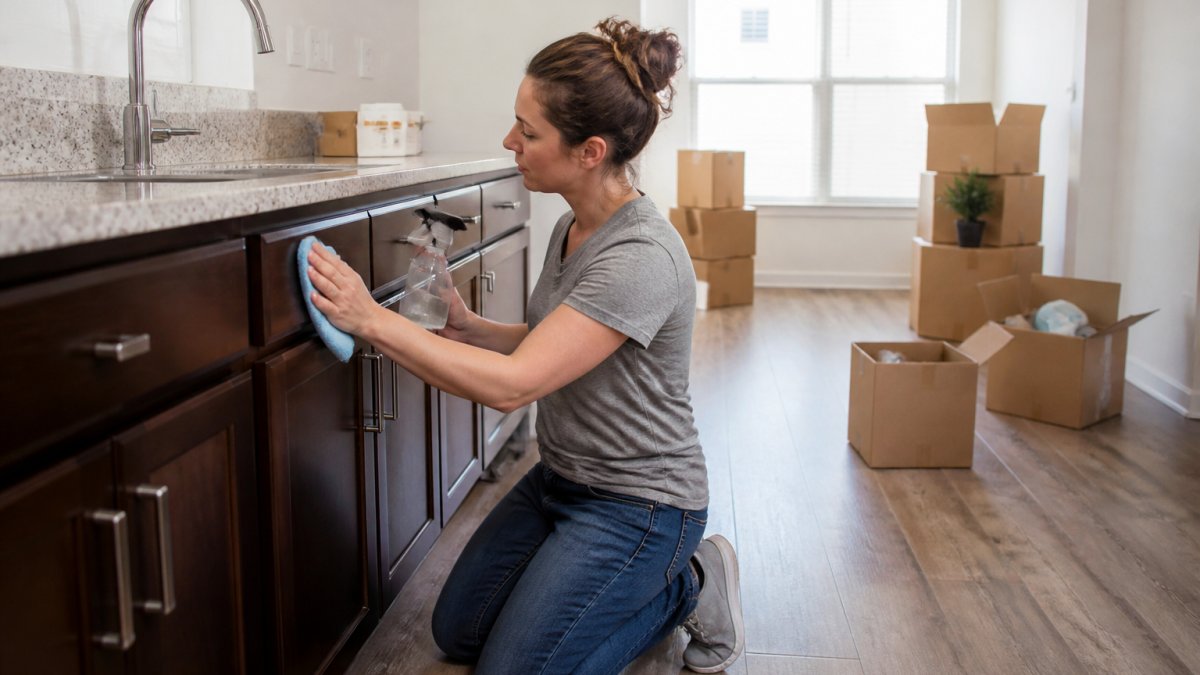
Work in this order: kitchen, bathroom, living areas, bedrooms, then windows and trim. Save floors for last in every room so you are not re-soiling a clean surface.
Kitchen: Appliances, Countertops, and Cabinets
The kitchen decides most deposit disputes. Grease and food residue are what property managers check first.
- Wipe down countertops, then clean the backsplash and the wall behind the stove
- Degrease the stovetop, drip pans, and range hood filter
- Clean the oven interior, including the door glass and racks
Bathroom: Sink, Faucet, Toilet, and Tub
Bathrooms are where hard water and mildew quietly cost renters money. Scrub the tub and shower surround, and treat mildew staining rather than painting over it.
- Descale the sink, faucet, and showerhead
- Scrub the toilet inside, outside, and around the base
- Clean the tub, tile, and grout lines
Living Areas and Bedrooms: Floors, Walls, and Fixtures
Living areas and bedrooms are mostly about dust and marks. Wipe walls, doors, and light switches, then handle the floors.
- Dust ceiling fans, light fixtures, and vents
- Wipe walls, doors, door frames, and outlet covers
- Clean inside closets and wipe closet shelves
Windows, Blinds, and Baseboards
Windows and baseboards separate an average clean from a professional one. Wipe interior windows, sills, and frames where reachable.
- Clean interior windows, sills, and window frames
- Dust and wipe blinds, or vacuum drapes if the lease requires it
- Wipe baseboards in every room, including behind furniture
Never spackle and paint over holes without checking your lease first. Some landlords require their own maintenance team to handle wall repairs, and unauthorized patches can be charged back to you.
How Long Does Move-Out Cleaning Take?
Move-out cleaning typically takes six to twelve hours for a one-bedroom apartment and ten to twenty hours for a three-bedroom home when you do it yourself.
But total hours is the wrong planning unit. What decides whether you finish is your working order and how much of the unit is still full of boxes. Cleaning around packed belongings doubles your time, because you clean the same surface twice.
Work Backward From Your Key Handover
Set your move-out date first, then count backward:
| Days Before Handover | What Happens | Why It Sits Here |
|---|---|---|
| 14-10 days | Declutter, donate, and haul away anything you are not keeping | Cleaning an empty unit is roughly half the work of cleaning a full one |
| 10-7 days | Pack everything except daily essentials; wipe inside emptied cabinets and closets as you go | You clean each storage space once, while it is still empty |
| 7-5 days | Deep-clean the kitchen and bathroom | These two rooms carry the most deposit weight and the longest dry times |
| 5-3 days | Clean living areas, bedrooms, walls, doors, and trim | Dust and marks are easier to see once furniture is gone |
| 2-1 days | Floors last, then windows, blinds, and baseboards | Floors get re-soiled by every task above them |
| Day of handover | Final walkthrough and touch-ups only | Leave buffer for the one thing you missed |
Time Estimates by Room
Use these as planning blocks, not stopwatch targets, for an average two-bedroom unit with normal buildup.
- Kitchen, including oven and refrigerator interiors: 3-5 hours
- Bathroom: 1.5-2.5 hours
- Each bedroom: 45-90 minutes
Add three to five hours for carpet stains or pet odor, plus time for any closed-up or unused room, where dust settles heavily.
If You Only Have One Day
Prioritize in this order: kitchen appliances and surfaces, bathroom fixtures and grout, carpets, then floors. Those four areas account for the largest share of deposit deductions. Skip cosmetic items like ceiling fan blades before you skip an oven interior.
Book your professional carpet cleaning or deep clean at least a week before handover. Same-week appointments are the first to disappear at month-end, when most leases turn over.
When to Stop Cleaning and Hire Out
Hire a crew when your remaining time is under eight hours, when the unit has heavy grease or pet damage, or when you are moving out of state and cannot return for a re-clean.
If you hire out, schedule the clean after your belongings are out and before the walkthrough, and ask for a written scope naming the appliances and fixtures covered.
Move-Out Cleaning Tips for Renters: Supplies, Stains, and Carpets
Move-out cleaning tips for renters come down to three things: the right supplies, honest stain assessment, and knowing when to call a professional.
Cleaning Supplies and Safe Product Use
You do not need a closet full of specialty products. A focused kit handles almost everything.
- All-purpose cleaner, degreaser, and a bathroom cleaner for soap scum
- White vinegar and baking soda for hard water and odors
- Microfiber cloths, a scrub sponge, and a grout brush
Never mix bleach with ammonia-based products; the fumes are toxic.
If allergies or chemical sensitivity are a concern, eco-conscious products handle most move-out tasks well. For mold, pest residue, or heavy grease, match the product to the job rather than the mildest option.
Carpets, Stains, and When to Call a Professional
Carpets are the most common deposit deduction, and the reason is usually timing: a stain set for months behaves differently than a spill from last week.
- Blot, never rub, fresh spills
- Treat pet stains at the pad level, not just the surface
- Vacuum thoroughly before any wet treatment
Call a professional when you see pet odor that returns after cleaning, water rings, or stains that predate your move-in. Document pre-existing damage with dated photos so you are not charged for someone else’s wear.
Walk your unit with your phone camera before you clean anything. Dated “before” photos are your strongest defense against charges for damage that existed when you moved in.
Your Move-Out Cleaning Checklist Printable and Final Walkthrough
A move-out cleaning checklist printable is worth building before you start, because a printed list keeps you honest when fatigue sets in. Tape one copy to the fridge and check items off as you finish.
Build it with these columns: room, task, done, notes, and photo taken. The photo column matters as much as the task column, because a clean unit you cannot prove you cleaned is one a landlord can still charge you for.
Read Your Lease Before You Scrub Anything
Your lease, not a generic checklist, sets the standard you are judged against. Find the move-out condition section and look for these phrases:
- “Broom clean” or “ordinary cleanliness” means swept, wiped, and free of trash. It does not mean professionally deep-cleaned.
- “Same condition as move-in, normal wear and tear excepted” is the most common standard. It sets a comparison, not a perfection bar.
- “Professional carpet cleaning required” or “receipt required” means you must pay for a service and keep proof. Some leases name the vendor.
If your lease is silent on an item, the default is ordinary cleanliness plus no tenant-caused damage. Do not let a landlord upgrade that standard at the walkthrough.
Ordinary Wear and Tear vs. Tenant-Caused Damage
This distinction decides most deposit disputes. Wear and tear is expected deterioration from living in a space; damage is a specific event or neglect you caused. Landlords can charge for the second, not the first.
| Item | Usually Wear and Tear | Usually Chargeable Damage |
|---|---|---|
| Paint | Faded color, minor scuffs, small nail holes | Large holes, crayon or marker on walls, unpainted patches |
| Carpet | Traffic-path matting, minor fading | Burns, pet stains, tears, heavy odor |
| Floors | Light surface scratches | Deep gouges, water damage, missing planks |
| Countertops | Faint scratches | Burns, chips, stains from dye or heat |
| Blinds | Faded slats | Broken slats, missing cords, bent rails |
| Appliances | Normal wear on handles | Broken racks, cracked glass, grease baked on |
Age matters. A carpet already ten years old at move-in has little value left to charge you for, and many states limit recovery for normal aging.
Document the Unit Like You Expect a Dispute
Assume you will need your evidence months later. Build a digital folder with these items:
- Dated photos and a walk-through video of every room after cleaning, before keys are returned
- Your move-in inspection form and any move-in photos you took
- Receipts for any professional cleaning, carpet treatment, or repairs
Photograph the same angles at move-in and move-out so the comparison is obvious. Timestamped phone photos carry a date automatically, so they hold up better than undated images.
Know Your Deposit Timeline
Most states set a deadline for returning a deposit after move-out, and many require an itemized written statement of deductions. Deadlines commonly fall between two weeks and 60 days, but the exact number, the penalty for missing it, and whether interest is owed vary by state.
If the deadline passes with no statement, send a written demand and keep a copy. Many states allow extra damages when a landlord misses the deadline or withholds without an itemized accounting.
The Final Walkthrough
Arrive early and walk the unit with the landlord or property manager. Bring your checklist, photos, and a pen.
- Walk room by room in the same order you cleaned
- Note anything you dispute in writing on the spot, and ask for a signed copy
- Photograph any item the landlord flags, before and after you discuss it
If you cannot attend in person, ask for a remote walkthrough or a written condition report you can respond to. Silence is not agreement, but it is harder to rebut later.
Do not sign a walkthrough form that lists damage you did not cause, even under pressure at the door. Write “disputed” next to the item, note why, and keep your copy. A signature without a dispute note is much harder to unwind.
If you want the cleaning handled without the guesswork, Bettermark Home & Property Services, LLC offers move-out cleaning built around inspection standards, with background-checked providers, eco-conscious product options on request, and a satisfaction guarantee that includes a free re-clean if something is missed.
Frequently Asked Questions
What should renters clean before moving out?
Focus on the areas landlords inspect most: kitchen appliances (oven, refrigerator, microwave), bathroom fixtures (toilet, tub, sink, faucet), all floors, baseboards, window sills, and interior windows. Remove all personal belongings, trash, and debris. Wipe down walls, doors, light switches, and outlet covers. Clean ceiling fans and light fixtures. Patch small nail holes if your lease requires it. A thorough move out cleaning checklist for renters covers every room plus storage areas and closets.
How clean does an apartment need to be when you move out?
It should look as close to move-in condition as possible, minus normal wear and tear. Your lease sets the standard. Most leases require the unit returned in the same condition it was received, aside from routine deterioration like faded paint or minor carpet wear. Clean countertops, scrub the sink and faucet, vacuum and mop floors, and wipe down baseboards and window sills. If your lease specifies professional carpet cleaning, follow that requirement exactly and keep the receipt.
How long does move-out cleaning take?
A studio or one-bedroom apartment typically takes 3 to 5 hours for one person. A two-bedroom unit runs 5 to 8 hours. A three-bedroom home can take 8 to 12 hours or more. Factors include the unit’s current condition, whether appliances need deep cleaning, and whether carpets require shampooing. Splitting the work across two or three days is common. If you hire a professional service, most complete a standard apartment in 2 to 4 hours with a crew.
Do renters need to clean carpets before moving out?
Check your lease first. Many leases require professional carpet cleaning and specify that you provide a receipt. If your lease does not require it, vacuum thoroughly and spot-treat stains. For tough stains or pet odors, professional cleaning is worth the cost because it protects your security deposit. Normal wear and tear, such as minor fading or traffic patterns, is not your responsibility, but stains and pet damage usually are. Document carpet condition with dated photos before you move out.
Can a landlord charge for cleaning after a tenant moves out?
Yes, but only for cleaning beyond normal wear and tear. Landlords can deduct for excessive dirt, stains, pet damage, or trash left behind. They cannot charge for routine deterioration from ordinary use. Security deposit rules vary by state, and many states require landlords to provide an itemized list of deductions within a specific timeframe, often 14 to 30 days. Request a move-out inspection and document the unit’s condition with photos and a signed checklist to protect yourself.
Should renters hire a professional move-out cleaner?
Hiring a professional can save time and reduce deposit disputes, especially for larger units or units with carpet and appliance issues. Professional cleaners know what property managers look for and often provide a receipt you can show your landlord. If your lease requires professional cleaning, hiring a service ensures compliance. If you clean it yourself, use a move-out cleaning checklist printable to track every task and take dated photos as proof of condition.