Eco Friendly Office Cleaning Services: 2026 Buyer’s Guide
Table of Contents
- What Eco Friendly Office Cleaning Services Actually Include
- Eco-Friendly Office Cleaning Products: What to Ask For
- Benefits of Green Cleaning for Businesses
- Green Cleaning Certification: How to Verify a Provider’s Claims
- Office Cleaning Service Checklist for Evaluating Providers
- Pricing Drivers and What a Free Estimate Should Cover
- How to Choose Eco Friendly Office Cleaning Services
- Frequently Asked Questions
Last Updated: October 18, 2026
What Eco Friendly Office Cleaning Services Actually Include
Eco friendly office cleaning services are professional janitorial programs that use certified low-toxicity products, reduced-waste methods, and documented safety practices to clean commercial spaces.
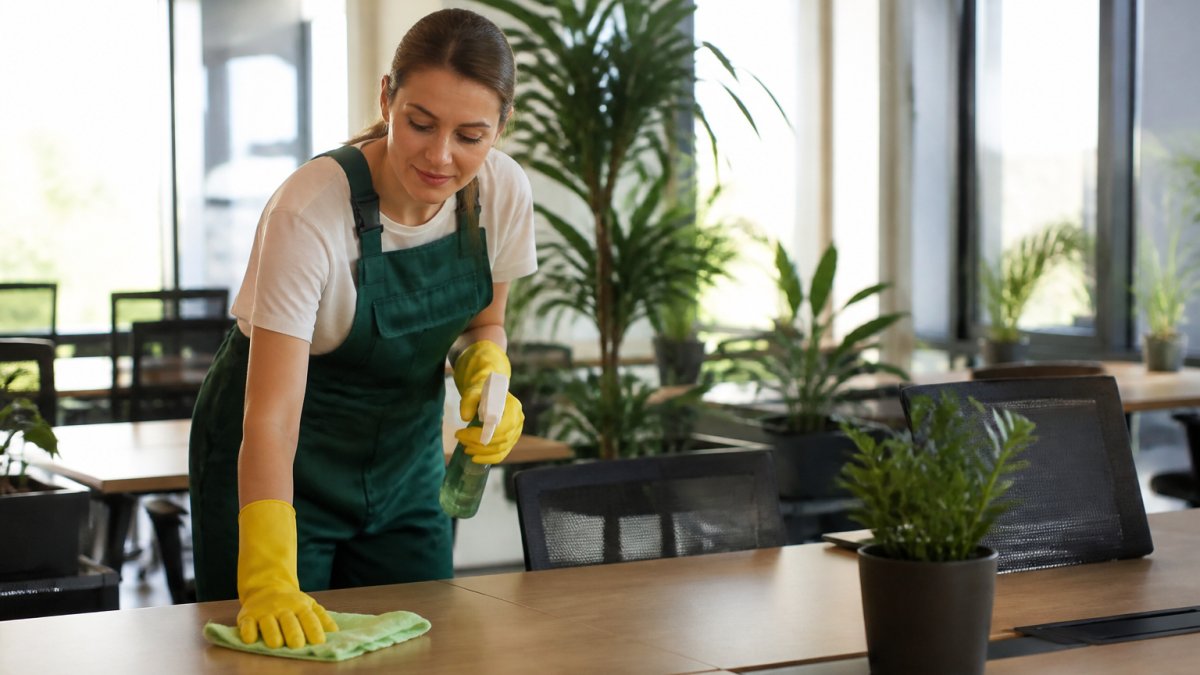
Green cleaning is the practice of cleaning a building with products and processes chosen to reduce chemical exposure and environmental impact without lowering hygiene standards.
Core Tasks and Service Scope
A typical scope covers routine cleaning on a set frequency, plus periodic deep cleaning. Expect:
- Trash and recycling removal with waste reduction in mind
- Dusting of desks, ledges, and vents
- Restroom cleaning and sanitizing with EPA-registered disinfectants
- Floor care: vacuuming, mopping, and periodic carpet cleaning
- Breakroom surfaces, appliance exteriors, and sinks
- Glass cleaners on interior partitions and entry doors
- High-touch surfaces: handles, switches, shared keyboards, elevator buttons
Scope should be written down. A customized cleaning plan lists what happens daily, weekly, monthly, and quarterly, so nobody argues about the baseboards in month three.
What Separates Green Providers From Standard Janitorial Crews
The difference is documentation, not vocabulary. Standard crews clean well but rarely tell you which products they used, at what dilution, or why. Green providers can hand you a product list with certifications, dilution ratios, and safety data sheets.
A common mistake buyers make is accepting “all-natural products” as a complete answer. Plant-based ingredients can still irritate skin or eyes, and “all-natural” is not a regulated certification. Ask for the specific product line and its certification.
Eco-Friendly Office Cleaning Products: What to Ask For
Ask for the product list in writing, with certifications and dilution instructions attached. That single request filters out most pretenders. A real green program can name its all-purpose cleaners, glass cleaners, floor products, and disinfectants, and explain where each is used.
Here is what to look for by product category:
- All-purpose cleaners: third-party certified, fragrance-free where possible
- Glass cleaners: alcohol or plant-surfactant based, no ammonia
- Floor cleaning products: pH-appropriate for the surface, low-residue
- Disinfectants: EPA-registered, used only on the surfaces and dwell times on the label
- Carpet cleaning: low-moisture methods that cut drying time and mold risk
Do not accept a “green” disinfectant that has no EPA registration. In the United States, disinfectant claims are regulated, and a product marketed as disinfecting without registration is either mislabeled or not a disinfectant. Using it on high-touch surfaces gives you false confidence.
One nuance most guides skip: disinfectants are not the same as cleaners, and overusing them is a real problem. Many offices spray disinfectant on every surface daily. That increases chemical exposure and cost without improving occupant safety. Clean first, then disinfect the surfaces that need it, following label dwell times.
Benefits of Green Cleaning for Businesses
The business case rests on three things: healthier occupants, lower chemical exposure, and a sustainability story you can actually document. Many businesses find that a switch to certified products reduces complaints about harsh smells and eye irritation, which matters in enclosed offices with limited ventilation.
Indoor Air Quality and Employee Health
Indoor air quality is where green cleaning earns its keep. Conventional cleaning can introduce volatile organic compounds and fine particulates during and after application, and offices with poor ventilation hold onto them longer. Fragrance-heavy products are a frequent culprit in complaints from employees with asthma or sensitivities.
Practical steps that help:
- Switch to fragrance-free or low-fragrance certified products
- Increase ventilation during and after cleaning
- Use microfiber cloths and mops, which lift soil with less product and less water
- Schedule deep cleaning when the office is empty
- Track occupant feedback before and after the switch
That last point is the honest one. Measuring workplace health outcomes is hard, and no vendor should promise you a specific reduction in sick days. What you can measure: complaint volume, product usage, waste volume, and whether cleaning schedules are actually met.
Green cleaning is verifiable through documentation, not outcomes you can promise. Ask for product lists, certifications, dilution logs, and service records, then compare them quarter over quarter.
Green Cleaning Certification: How to Verify a Provider’s Claims
Verification starts with two questions: which products, and which certification? Third-party programs such as Green Seal and UL ECOLOGO certify cleaning products against published environmental and health criteria, and Safer Choice is a label administered by the U.S. Environmental Protection Agency. EPA Safer Choice product labeling program explains what the label covers and, just as usefully, what it does not.
For the provider itself, look for green cleaning standards from industry bodies such as ISSA, which publishes cleaning industry management standards covering quality systems and green building coordination. ISSA cleaning industry standards and certification programs lists the relevant programs.
A practical verification checklist:
- Written product list with brand names and certifications
- Safety data sheets available on request
- Dilution control system or pre-measured concentrates
- Staff training records on product handling
- Documented cleaning procedures per area
- Waste and recycling handling policy
- Insurance and background-check documentation for staff
Ask to see one safety data sheet and one certification record during the walkthrough, not after signing. A provider who can produce both on the spot has the system in place. One who promises to email them later usually does not.
Office Cleaning Service Checklist for Evaluating Providers
Use this checklist during every walkthrough. Score each item on a 1-5 scale and compare providers on the same sheet.
| Evaluation Area | What to Check | Red Flag | Suggested Weight |
|---|---|---|---|
| Product transparency | Written list with brand names and certifications | Vague “green” claims | High |
| Staff screening | Background checks documented and repeated | No screening policy | High |
| Scope clarity | Written task list by frequency, with exclusions | Verbal-only scope | High |
| Quality control | Inspection process and re-clean policy | No follow-up mechanism | High |
| Communication | Named contact and response time | Call center only | Medium |
| Sustainability | Waste, water, and product practices | No policy at all | Medium |
| Insurance | Liability coverage documented | Cannot produce certificate | High |
| Training | Product handling and safety training records | No training program | Medium |
| Reporting | Usage and service records available | No reporting at all | Low to medium |
A few items deserve emphasis.
Quality control is the other one. A common complaint is that the first cleaning is excellent and month two is mediocre.
Product transparency deserves a specific test.
Training is the item most buyers skip. Ask whether staff are trained on dilution ratios, dwell times, and hazard communication, and whether training is documented.
Finally, ask for one recent client reference in a building similar to yours, same floor mix, similar restroom count, comparable occupancy.
Pricing Drivers and What a Free Estimate Should Cover
Office cleaning pricing is not a single rate, it is the output of several variables that providers weigh differently. Understanding those variables is the difference between comparing quotes and comparing guesses. The main cost drivers in commercial janitorial work are:
- Square footage and cleanable area. Providers usually price on cleanable square footage, not total leased space. Storage rooms, server closets, and locked offices may be excluded. Ask which areas are in scope.
- Frequency and service days. Five nights a week costs more per month than three, but the per-visit rate often drops because travel and setup are amortized. Weekly service can cost more per visit than nightly service.
- Occupant density and restroom count. Restrooms are the most labor-intensive zone per square foot. A 5,000-square-foot office with two restrooms prices differently from the same footprint with six.
- Floor types and finishes. Carpet, VCT, hardwood, and polished concrete each require different products, equipment, and time. Periodic carpet extraction and floor stripping/waxing are usually quoted separately.
- Product certification requirements. Certified product lines and dilution-control systems carry a higher product cost than commodity chemicals. That premium is real but usually modest relative to labor.
- Scheduling window. After-hours and overnight work carries wage premiums in many markets. Daytime cleaning can reduce cost but creates occupant disruption.
- Add-on scope. Interior glass, high-dusting, appliance interiors, and disinfection fogging are commonly priced as line items rather than bundled.
A practical way to sanity-check a quote is to ask for the estimated labor hours per visit and the loaded hourly rate behind it. Most providers will share hours even when they will not share rate.
A free estimate should include:
- Square footage and areas covered, with exclusions named
- Task list by frequency (daily, weekly, monthly, quarterly)
- Product line and certifications proposed
- Staffing model and expected hours per visit
- Add-on services priced separately
- Start date, term, and price-adjustment terms
Transparent pricing is the gap in this market. Most providers quote a monthly figure with no explanation of what drives it, which makes comparison shopping nearly impossible. Ask for the cost drivers in writing.
We do not publish fixed rates, because a quote without a walkthrough is a guess. Bettermark Home & Property Services, LLC provides estimates after reviewing the space, and pricing depends on scope and frequency. Request a quote through our site for current rates.
How to Choose Eco Friendly Office Cleaning Services
Choosing comes down to evidence, not adjectives. Rank providers on four criteria: verifiable product certifications, documented staff screening, a written scope with quality controls, and pricing you can actually compare.
A shortlist process that works:
- Define your scope and frequency in writing before you call anyone
- Request product lists and certifications with the first quote
- Walk the space with each finalist and watch what they inspect
- Ask for the re-clean policy in writing
- Start with a trial period and a joint walkthrough at week two
One insider observation: the walkthrough reveals more than the proposal. A provider who opens closets, checks under desks, and asks about floor finishes is thinking about the work. One who only measures square footage is thinking about the invoice.
For offices that want a single provider across cleaning and property needs, a family-owned operation with eco-conscious product options available on request, background-checked providers, and a satisfaction guarantee with free re-cleaning covers the essentials. Bettermark Home & Property Services, LLC offers a mobile-friendly booking system and customized plans for commercial spaces. OSHA guidance on cleaning chemical safety in the workplace is worth reading before you finalize any product list, particularly the sections on hazard communication and employee training.
The hard part is not finding a provider who says “green.” It is finding one who can prove it with product lists, certifications, and screening records, then keep quality consistent past the first month.
Frequently Asked Questions
What do eco friendly office cleaning services include?
Most green office cleaning services cover the same scope as conventional janitorial work: vacuuming, floor care, restroom sanitizing, breakroom cleaning, trash removal, dusting, and high-touch surface disinfection. The difference is in the products and process. Eco-friendly providers use plant-based or third-party certified cleaners, microfiber systems that reduce water and chemical use, and often color-coded cloths to prevent cross-contamination between restrooms and desks. Ask any provider for a written service scope before signing, and confirm whether deep cleaning, carpet extraction, and window cleaning are included or priced separately.
Are green cleaning products effective for offices?
Yes, when they are matched to the task. Certified green all-purpose cleaners and glass cleaners handle routine soil on desks, glass, and floors well. For disinfection, look for EPA-registered disinfectants that carry a Safer Choice or Green Seal designation where available, and confirm dwell time is followed. The main trade-off is that some plant-based products need a longer contact time than harsh chemical alternatives. A provider that trains staff on dilution ratios and dwell times gets comparable results without the chemical residue.
How can a business choose a green cleaning service?
Start with a checklist: ask for proof of certification, a written service scope, background-check screening for staff, a satisfaction or re-clean guarantee, and a line-item estimate that separates recurring service from add-ons. Request the safety data sheets for the products they use and confirm whether eco-friendly supplies are standard or an upgrade. Walk one floor with the account manager before signing so expectations are set on high-touch surfaces, restroom frequency, and waste and recycling handling.
How can offices reduce waste during cleaning?
Ask the provider to use microfiber cloths and mop pads that are laundered and reused, concentrated products mixed at correct dilution instead of ready-to-use bottles, and refillable dispensers in restrooms and breakrooms. Set up clearly labeled recycling and compost stations so crews sort correctly, and request that trash liners only be replaced when soiled rather than every visit. Small operational choices like these cut plastic and chemical waste without reducing cleaning quality.