
How to Maintain Consistent Cleaning Quality at Home
Last Updated: November 10, 2026
Quick Summary
Maintain consistent cleaning quality by setting a written standard, scheduling tasks by frequency, and verifying results with pass/fail checks. Define what done looks like for each room, assign every task to a named owner, and inspect one or two rooms after each session so missed spots are corrected before they become the new normal.
- Define three levels of clean and write down what each means in your home.
- Run a daily reset of 10 to 20 minutes and a weekly clean of 45 to 90 minutes.
- Assign chores by room and name, since shared tasks with no owner get done halfway.
- Do a walkthrough that looks up, down, and at the edges to catch quality drift.
- If the same item fails twice, fix the checklist, supplies, or time allotted.
Table of Contents
- Why Cleaning Quality Slips and How to Stop It
- Build a Cleaning House Checklist That Sets the Standard
- How to Keep a Clean House With a Busy Schedule
- Cleaning Standards in Housekeeping: Setting Measurable Expectations
- 10 Ways to Keep Your House Clean Without Burning Out
- Book a Recurring Clean That Holds the Standard for You
- Frequently Asked Questions
Why Cleaning Quality Slips and How to Stop It
Most homes don’t get dirty overnight, and they don’t get clean by accident. The gap between guest-ready and always behind comes down to one thing: consistent cleaning quality. A deep clean can sparkle, and three weeks later the standard has quietly fallen apart.
That slide is not laziness. It’s a missing system.
The Real Causes of Quality Drift
Quality drift happens when cleaning is treated as a mood instead of a method. The usual culprits:
- No written standard. If “clean” lives only in your head, it changes with your energy level.
- All-or-nothing thinking. Waiting for a free Saturday lets small messes pile into big ones.
- No owner for each room. Shared chores with no names attached get done halfway.
The fix is simple to describe and harder to live: set a standard, schedule the work, and verify the result.
Build a Cleaning House Checklist That Sets the Standard
A cleaning house checklist is the backbone of consistent results. It turns vague expectations into specific tasks anyone can follow, whether that’s you on a Tuesday night or a hired team.
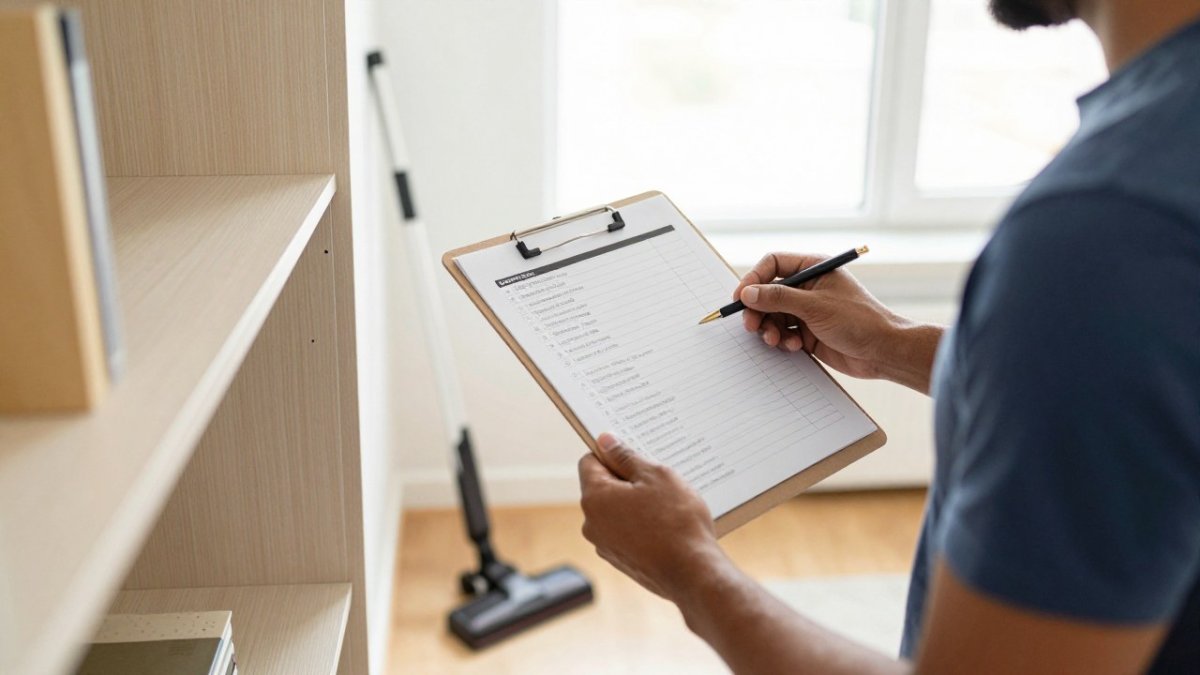
Start with three levels of clean, then write down what each means in your home.
Room-by-Room Quality Criteria
Use this framework to define what “done” looks like before anyone picks up a cloth.
| Room | Daily Touch-Up | Weekly Task | Quality Check |
|---|---|---|---|
| Kitchen | Wipe counters, sweep crumbs | Mop floors, clean appliance fronts | No grease film, no crumbs in corners |
| Bathroom | Wipe sink, hang towels | Scrub toilet, clean mirror | No water spots, no grime at base |
| Bedroom | Make bed, clear nightstand | Dust surfaces, change linens | No dust on headboard, floor clear |
| Living areas | Pick up clutter, fluff cushions | Vacuum, dust shelves | No visible dust, floors grit-free |
The quality check column matters most, it’s how you catch drift before it spreads. Don’t skip it because the room “looks fine” from the doorway; check baseboards, corners, and the tops of frames.
How to Keep a Clean House With a Busy Schedule
The practical answer to how to keep a clean house with a busy schedule is to stop hunting for a big block of time. Build small habits and plan work by frequency so nothing piles up.
A Task-Frequency Matrix You Can Actually Keep
Most households run on four cadences. Assign every task to one of them and stop deciding from scratch each day.
| Cadence | Typical Time | What Belongs Here |
|---|---|---|
| Daily reset | 10-20 minutes | Dishes, counters, making beds, one load of laundry, clutter pickup in main rooms |
| Weekly clean | 45-90 minutes | Vacuuming, mopping, bathroom scrub, changing linens, dusting main surfaces |
| Monthly task | 20-40 minutes | Baseboards, appliance fronts, inside the microwave, cabinet fronts, light fixtures |
| Seasonal deep clean | 2-4 hours, split across days | Windows, vents, closets, behind and under furniture, mattress rotation |
Treat the time ranges as planning guides, not deadlines. A small apartment sits at the low end; a larger home with pets or children lands at the high end or above.
Build the Week Around Your Real Schedule
- Use a 15-minute cleanup each evening. Set a timer and reset one room rather than the whole house.
- Assign daily cleaning to the highest-traffic zones only: kitchen, bathroom, entryway, and the main living area.
- Batch weekly cleaning into one or two focused sessions, heaviest rooms first while energy is highest.
A daily routine guide helps here: best ways to keep home clean walks through a daily and weekly schedule plus a room-by-room checklist you can follow as written.
Match the Plan to the Household
A routine that ignores who lives in the home will fail within a month. Adjust the matrix to the actual sources of mess.
- Pets: add vacuuming and lint-rolling to the daily reset, and wash pet bedding weekly rather than monthly.
- Children: keep a low bin or basket in each main room for quick pickup, and expect the daily reset to take the upper end of its range.
- More occupants: laundry and dish cadences usually need to move up a level, while dusting can stay weekly.
Distribute the Work Fairly
Task prioritization beats perfection. If you only get to the kitchen and bathroom, you’ve handled the two rooms where bacteria and grime move fastest. But one person absorbing every task is the most common reason a schedule collapses.
- Assign by room and name. Shared chores with no owner get done halfway.
- Match tasks to time available. Ten minutes suits a daily reset; a weekly clean needs a protected block.
- Rotate the unpopular tasks so the same person isn’t always on bathroom duty.
Watch out: scheduling every task for the weekend recreates the all-or-nothing pattern that causes the mess. Spread the load across the week so one busy day doesn’t erase the routine.
Typical time for each cleaning cadence
Cleaning Standards in Housekeeping: Setting Measurable Expectations
Cleaning standards in housekeeping are the written rules that define acceptable results. In a professional setting they keep quality the same whether one person cleans or five do. The difference between a standard and a wish is that a standard can be checked by someone who did not do the work.
Turn Expectations Into Pass/Fail Checks
A measurable standard answers three questions for every surface: what is being checked, how, and what counts as a failure. Write each as a pass/fail test rather than an adjective.
- Surface cleanliness: wipe a white cloth across a shelf. If it comes up gray, the dusting failed. Pass means the cloth stays white.
- High-touch surfaces: doorknobs, light switches, handles, and faucet levers get cleaned every visit. Pass means no visible film and no sticky feel.
- Floor cleaning: no visible debris, no sticky spots underfoot, and corners reached. Pass means a bare foot or white sock crosses the floor without picking up grit.
A Room-by-Room Quality-Control Walkthrough
Use the same short route every time so the check becomes a habit. Walk in, look up, look down, then look at the edges.
- Look up. Check ceiling corners, vent grilles, and the tops of frames and cabinets for dust and cobwebs.
- Look down. Check floor edges, under furniture, and behind doors for debris and missed vacuum lines.
- Look at the edges. Baseboards, backsplashes, and the seam where the counter meets the wall show quality drift first.
- Touch the high-touch points. Light switches, handles, and faucets are what guests notice and what gets skipped when time runs short.
- Smell the room. A clean bathroom smells neutral, not perfumed. Heavy fragrance usually masks a missed source rather than fixing it.
A common pattern is that a room passes from the doorway and fails at the edges. The walkthrough catches that gap before it becomes the new normal.
Verify, Record, and Correct
A standard only holds if someone checks it and something happens when it fails.
- Verify on a set cadence. Check one or two rooms after each cleaning session rather than inspecting the whole house. Rotating rooms means every space gets reviewed within a few weeks.
- Record the result simply. A short list with pass/fail marks and a note for any miss is enough. The record shows patterns, such as the same bathroom corner failing every time.
- Correct the cause, not just the spot. If the same item fails twice, the problem is usually the checklist, the supplies, or the time allotted, not effort.
If you hire help, put the standard in writing before the first visit and agree on how failures are handled. These steps to find reliable house cleaners cover checking references and agreeing on a written scope, so “clean” means the same thing to everyone.
Watch out: a checklist that grows every time something is missed becomes too long to finish, and the routine collapses. Keep the pass/fail list to items that actually change how the room feels and looks.
10 Ways to Keep Your House Clean Without Burning Out
Here are ten practical ways to protect cleaning quality without turning your week into a chore marathon.
- Follow the one-touch rule. Handle mail, dishes, and clothes once, not three times.
- Keep a portable caddy stocked with your core cleaning supplies.
- Declutter first. Clutter reduction makes every surface faster to clean.
- Clean high-traffic areas first. Entryways, kitchens, and bathrooms earn your time.
- Set a task timer. Short bursts beat marathon sessions.
- Store tools where you use them. A squeegee in the shower gets used.
- Delegate tasks by room and name.
- Dust before you vacuum. Dusting sends debris to the floor.
- Open windows while you clean. Better indoor air quality and fewer fumes.
- Check your work. A two-minute walkthrough catches quality drift early.
Watch out: cleaning a dry surface with a dry cloth just moves dust into the air. Dampen the cloth first to capture dust and allergens.
Book a Recurring Clean That Holds the Standard for You
Some standards are easier to keep when someone else owns them.
Bettermark Home & Property Services, LLC offers recurring cleaning around your schedule. Booking runs through our mobile-friendly system, and our background-checked and screened cleaning providers are part of our service.
You can see the full recurring cleaning service and what each visit covers. If you’d rather understand the booking process first, read whether you should book professional cleaning services online. When you’re ready, get your quote and book online for current prices and availability.
The real test of any cleaning routine is whether it still holds up in week six. If it doesn’t, the standard was never written down.
Frequently Asked Questions
What is the 5-5-5 rule for cleaning?
The 5-5-5 rule splits cleaning into three short blocks: 5 minutes tidying one room, 5 minutes on a second room, and 5 minutes on a third. Fifteen minutes total, and you touch the spaces that collect the most clutter. It works because it removes the decision of where to start. Pair it with a cleaning house checklist so each 5-minute block has a clear target, and you get a repeatable habit instead of a sporadic sprint.
How do I make sure every room is cleaned to the same standard?
Write down what finished looks like for each room, then check against that list instead of relying on memory. A bathroom standard might be: fixtures streak-free, mirror clear, floor swept, trash emptied, fresh towels. A kitchen standard: counters clear, sink scrubbed, appliance fronts wiped, floor vacuumed. Post the criteria where you or a cleaner can see them. When cleaning standards in housekeeping are written and measurable, quality stops depending on who did the work or how rushed they were.
How can I keep my house clean with a busy schedule?
Shrink the tasks and attach them to moments you already have. Wipe the bathroom sink after brushing your teeth, run a 15-minute cleanup before bed, and keep supplies in a portable caddy so you are not hunting for them. Set a weekly slot for floors and bathrooms and a seasonal slot for deep cleaning like baseboards and windows. If the schedule still slips, a recurring professional clean can take the weekly load off.
What happens when cleaning quality drops after the first visit?
Quality drift usually happens when expectations were never written down or when the same person is not checking the work. Fix both: keep a room-by-room checklist that the cleaner works from, and do a quick walkthrough after each visit against that list. A reputable service should welcome the feedback and correct missed items. Bettermark offers a satisfaction guarantee that includes free re-cleaning.
