Best Eco Friendly Cleaning Products: 2026 Guide
Table of Contents
- What Makes a Cleaning Product Truly Eco Friendly
- Quick Comparison: Top Eco Friendly Cleaning Products
- Best Non-Toxic Cleaning Products for Every Room
- Eco-Friendly Cleaning Brands Worth Knowing
- Refillable Cleaning Products That Cut Plastic Waste
- Choosing the Best Eco-Friendly All-Purpose Cleaner
- Cost Per Use, Safety, and What Most Shoppers Miss
- Frequently Asked Questions
Last Updated: October 10, 2026
What Makes a Cleaning Product Truly Eco Friendly
The best eco friendly cleaning products earn that label through verified certifications, transparent ingredient lists, and packaging that does not outlive the dirt it removes. At Bettermark Home & Property Services, LLC, we field questions daily from homeowners who want to know whether “green” on a label means anything.
Eco friendly cleaning is the practice of using products formulated with plant-based, biodegradable ingredients that clean effectively while reducing harm to indoor air quality, waterways, and human health. The category spans sprays, concentrates, detergents, and refill systems.
The problem: “natural,” “green,” and “eco” are marketing words, not regulated terms. The U.S. Environmental Protection Agency’s Safer Choice program exists precisely because shoppers cannot verify claims on their own. Third-party certifications do the verifying for you.
Certifications and Labels That Actually Mean Something
Three certifications carry real weight. Safer Choice means the EPA reviewed every ingredient against human health and environmental criteria. USDA Certified Biobased verifies a product’s renewable plant content. Cradle to Cradle checks material health plus packaging recyclability.
A common mistake is trusting front-label claims like “chemical-free.” Everything is a chemical, including water. Look for the certification mark on the back instead.
Scan the EPA’s Safer Choice product list before you shop. It takes two minutes and eliminates most greenwashing instantly.
Quick Comparison: Top Eco Friendly Cleaning Products
Match the product to the job before you buy. Concentrates cost less per use; ready-to-use sprays cost more but remove friction.
| Product Type | Best For | Cost Per Use | Plastic Waste |
|---|---|---|---|
| Concentrated all-purpose | Whole-home cleaning | Lowest | Low (one bottle, many refills) |
| Ready-to-use spray | Quick touch-ups | Highest | High (replaced often) |
| Refill tablets | Small storage spaces | Low | Lowest |
| Powdered cleanser | Scrubbing, sinks, tubs | Low | Low |
The pattern is consistent: the more concentrated the formula, the less you pay per cleaning and the less plastic you throw away.
Best Non-Toxic Cleaning Products for Every Room
Best non-toxic cleaning products share one trait: they list every ingredient and skip chlorine bleach, ammonia, and synthetic fragrance. But “non-toxic” is not a regulated claim, so the useful question is not which product calls itself non-toxic, it is which products you can verify.
Kitchen and Dishwashing
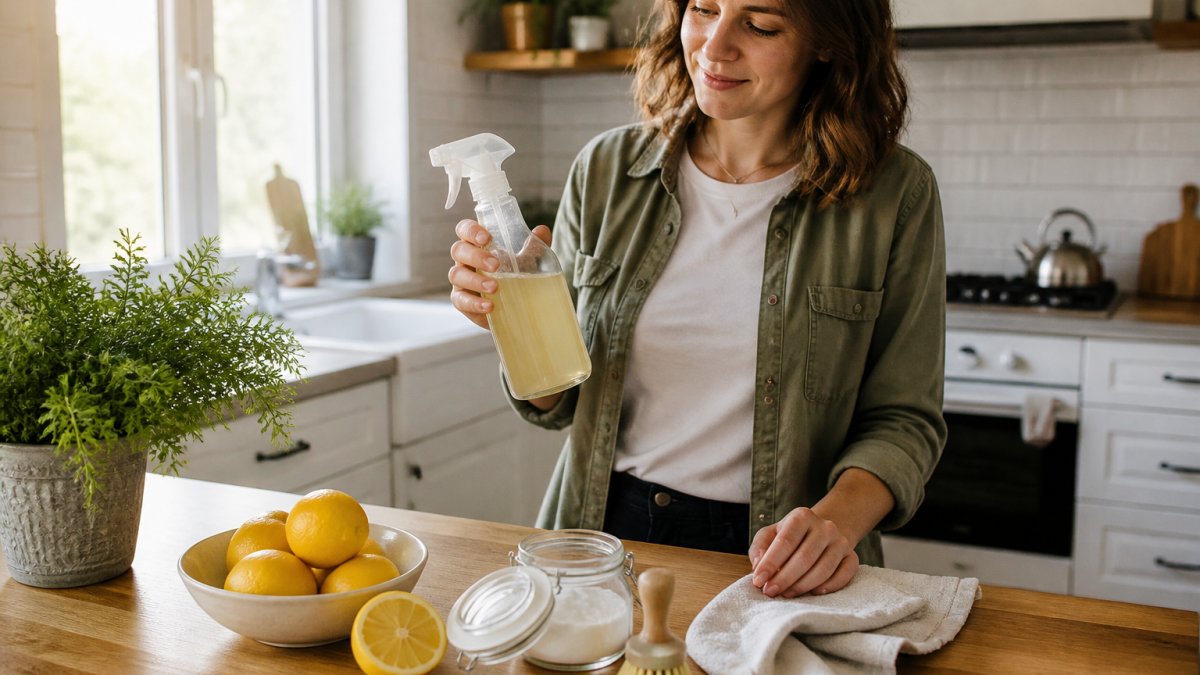
All-purpose and degreasing. A concentrated, fragrance-free all-purpose cleaner carrying the EPA Safer Choice mark is the workhorse here.
For baked-on grease on range hoods and stovetops, castile soap cut with warm water lifts oil without solvent fumes.
Dishwashing liquid. Look for plant-based surfactants that are readily biodegradable and a full ingredient list on the label or website. Avoid products that list only “surfactant blend” with no further detail.
Dishwasher detergent. Choose phosphate-free formulas. Phosphates feed algae blooms in waterways, which is why they were phased out of most consumer detergents. Also check for chlorine bleach, which some pods still contain.
Laundry Detergents
Plant-based, concentrated laundry detergents now match conventional performance for everyday soil. Concentration is the single biggest lever on both cost and shipping weight: a concentrated formula moves less water, which means a smaller bottle, fewer trucks, and a lower cost per load.
For stains, hydrogen peroxide works on light fabrics but can lighten colored ones, so test an inconspicuous spot first. Vinegar in the rinse cycle handles odors. Both are single-ingredient options that avoid the fragrance and dye load of conventional detergents.
Bathroom Cleaners
Bathroom cleaning is the hardest test for eco-friendly formulas because soap scum, hard water minerals, and mildew resist mild surfactants. A paste of baking soda and castile soap scrubs tubs and tile effectively. For disinfection, hydrogen peroxide-based sprays kill germs and break down into water and oxygen.
Material compatibility matters more here than anywhere else in the house. Vinegar etches natural stone such as marble, travertine, and limestone, and it dulls sealed grout over repeated use. Acid-based cleaners also damage some fixtures’ finishes.
Never mix vinegar and hydrogen peroxide in the same bottle. Combined in one container, they form peracetic acid, which irritates eyes and lungs. Use them separately, rinsing between applications. The same rule applies to bleach and ammonia, which form chloramine gases.
How to Verify a “Non-Toxic” Claim Before You Buy
Use the same three checks on every product in this section:
- Certification mark on the back. EPA Safer Choice means every ingredient was reviewed against human health and environmental criteria. USDA Certified Biobased verifies renewable plant content. Cradle to Cradle checks material health plus packaging recyclability.
- Full ingredient disclosure. The label or the company’s website should list every ingredient, not a “proprietary blend.” If a brand will not publish its ingredients, treat that as a data point.
- Cost per use, not shelf price. Concentrates and refills win on cost per cleaning almost every time; ready-to-use sprays win on convenience only.
A common pattern is that the products with the strongest environmental claims publish the least ingredient information. The certification marks are the shortcut around that problem.
Eco-Friendly Cleaning Brands Worth Knowing
Eco-friendly cleaning brands worth your money share three habits: full ingredient disclosure, third-party certification, and refill options. When evaluating any brand, check the label for a Safer Choice mark, visit the company’s ingredient glossary, and confirm whether refills ship in plastic-free packaging.
Brands that hide behind “proprietary blend” language are telling you something. Skip them.
We recommend applying the same standard to cleaning services. Bettermark Home & Property Services, LLC offers eco-conscious product options for exactly this reason, and we encourage clients to ask before booking.
Refillable Cleaning Products That Cut Plastic Waste
Refillable cleaning products cut plastic waste by decoupling the bottle from the formula. You buy the durable container once, then replenish with tablets, concentrates, or bulk refills.
The math favors refills quickly. A single concentrate bottle can make dozens of spray bottles’ worth of cleaner, and tablets ship in paper, not plastic. Single-use plastic is the default in conventional cleaning, and refills are the simplest way to break the habit.
The most sustainable bottle is the one you already own. Reuse it with concentrates or tablets before buying anything new.
Choosing the Best Eco-Friendly All-Purpose Cleaner
The best eco-friendly all-purpose cleaner is a concentrated, fragrance-free formula with a Safer Choice certification and a refill option. That combination delivers cleaning performance, verified safety, and low packaging waste.
Use this checklist before you buy:
- Certified by Safer Choice, USDA Biobased, or Cradle to Cradle
- Full ingredient list published on the label or website
- Fragrance-free or scented only with essential oils
- Concentrated, not watered down
- Refill available in plastic-free or reduced packaging
- Safe for the surfaces you actually clean
Material compatibility matters as much as ingredients. Vinegar etches natural stone and dulls sealed grout. Hydrogen peroxide can lighten colored fabric. Match the cleaner to the surface, not just the label.
Cost Per Use, Safety, and What Most Shoppers Miss
Most shoppers compare shelf prices. The number that actually determines what you spend is cost per use, and the number that determines your environmental footprint is what happens to the packaging after the product is gone. Neither appears on the front of the bottle.
Cost Per Use: The Math That Changes the Decision
Cost per use means the price of the product divided by the number of cleaning tasks it delivers, per load, per diluted bottle, or per refill. The pattern across the category is consistent, and it favors concentrates and refills:
- Ready-to-use sprays deliver one bottle of cleaning per bottle purchased. You pay for water and for a new plastic bottle every time.
- Concentrates deliver many diluted bottles per purchase. The upfront price is higher, but the per-bottle cost drops sharply once you divide by the number of refills the bottle makes.
- Refill tablets deliver one bottle of cleaning per tablet, shipped in paper rather than plastic. The per-use cost is typically low and the packaging weight is the lowest of the three.
- Powdered cleansers deliver many scrubbing sessions per container with minimal packaging.
To compare two products fairly, divide the price by the number of uses the label claims, then ask whether you actually use the full recommended dose. Many households over-dose liquid detergent and cleaner, which quietly doubles the real cost per use. A concentrate with a marked dilution line removes that guesswork.
The practical takeaway: a concentrate that costs more upfront but makes many bottles of cleaner beats a cheap ready-to-use spray on cost per cleaning in most cases. The exception is a product you use so rarely that the concentrate would expire or separate before you finish it.
Packaging Lifecycle: What Actually Happens to the Bottle
A bottle labeled “recyclable” is not necessarily recycled.
Refill systems sidestep the question. When you buy a concentrate or a tablet and reuse the bottle you already own, you avoid the recycling question entirely because there is no new bottle to process.
When you do buy new packaging, the hierarchy is roughly: reusable container you refill > concentrate in a small bottle > tablet in paper > recycled-content plastic > virgin plastic. Shipping weight matters too, concentrates and tablets move far less water, which lowers transport emissions per cleaning task.
Safety: “Non-Toxic” Is Not “Harmless”
“Non-toxic” does not mean safe to ingest, safe to mix with anything, or safe on every surface. The U.S. Centers for Disease Control and Prevention’s household chemical safety guidance covers what to do if a cleaner is swallowed or splashed in the eyes.
For households managing allergies or asthma, fragrance is often the real irritant rather than the cleaning agent itself. Fragrance-free formulas are the safer default, and “unscented” is not the same as “fragrance-free”, unscented products may contain masking fragrance.
Suitability: Match the Cleaner to the Surface and the System
Natural ingredients are not automatically suitable for every surface or every home. Before you commit to a product, check:
- Surfaces. Vinegar and other acids etch natural stone and dull sealed grout. Abrasive powders scratch some finishes. Hydrogen peroxide can lighten colored fabric and some colored grout.
- Septic systems. Septic-safe means avoiding antibacterial additives and excessive bleach, which can disrupt the bacterial balance a septic tank depends on. Check the label for septic-safe language.
- Pets and children. Some essential oils are toxic to cats and dogs even when the product is plant-based. Fragrance-free, essential-oil-free formulas are the safer choice in homes with pets or young children.
- Allergies. Patch-test any new cleaner on an inconspicuous area, and introduce one new product at a time so you can identify a reaction source.
Cost per use, packaging end-of-life, and surface compatibility are the three checks that separate a genuinely better purchase from a greener-looking label. Run all three before you buy.
Frequently Asked Questions
What do eco-friendly cleaning products mean?
Eco-friendly cleaning products use plant-based or biodegradable ingredients that break down without leaving harmful residue in your home or water supply. They typically avoid chlorine bleach, ammonia, and synthetic fragrances. Look for third-party certifications like Safer Choice or Green Seal, which verify that a product meets specific environmental and health standards. These products still clean effectively when used correctly, but they may need a bit more dwell time on tough stains compared to harsh chemical alternatives.
Which eco-friendly cleaning products actually work?
Products with plant-based surfactants, citric acid, or hydrogen peroxide tend to perform well on common household messes. Concentrated formulas often work as effectively as conventional cleaners because you control the dilution. Check for products tested against grease, soap scum, and hard water stains. Reading verified customer reviews and checking whether a brand publishes its cleaning performance data helps separate effective products from ones that rely on green marketing alone.
Are eco-friendly cleaning products safer for your home?
They reduce exposure to volatile organic compounds (VOCs) and harsh chemicals that can irritate airways, especially for people with allergies or asthma. The EPA notes that indoor air can contain higher concentrations of pollutants than outdoor air, and cleaning products are a common source. Choosing non-toxic, bleach-free formulas lowers that risk. No product is completely risk-free, so always follow label directions and ventilate rooms during and after cleaning.
What should I look for when buying green cleaning products?
Start with third-party certifications like EPA Safer Choice or Green Seal. Check the ingredient list for plant-based surfactants, biodegradable formulas, and concentrated packaging. Consider refillable options to reduce single-use plastic. Compare cost per use rather than sticker price, since concentrates often deliver more cleaning per dollar. Finally, match the product to the surface: an eco-friendly all-purpose cleaner handles most jobs, but bathrooms and kitchens may need specialized formulas for soap scum or grease.